Which dog breeds work best as models on Instagram for driving higher engagement and boosting product sales? Pet product merchants might consider engaging more "influencer dogs" for product photography; however, the costs involved — such as shooting expenses and the scheduling of pet models — can impact overall operating costs.
Three breeds have owned Instagram for years and still do: the French Bulldog, the Golden Retriever and the Poodle. They are the incumbent trio — huge hashtag volumes, celebrity ownership, and a decade of content momentum behind them. It is the best choice for pet product merchants when selecting models. But the fastest-growing attention in 2025 and 2026 is going somewhere else: Maltese mixes (above all the Maltipoo), the Italian Greyhound, the Great Dane and the Dachshund. These four are not yet the biggest by raw post count, but they are the breeds whose audiences are expanding fastest, whose body shapes photograph most distinctively on short-form video, and whose owners are the most likely to buy clothing, harnesses and accessories.
That distinction matters commercially. Hashtag volume tells you where the audience already is. Rising volume tells you where the buying intent is about to be.
Table 1: The scoreboard at a glance
| Breed | Approx. Instagram hashtag volume | AKC 2025 rank (US) | Why it works on camera |
|---|---|---|---|
| French Bulldog | ~39.8M | #1 (4th year running) | Bat ears, flat face, meme-ready expressions |
| Golden Retriever | ~38M | #3 | Backlit coat, expressive eyes, "good dog" warmth |
| Poodle | ~24.5M | #6 (down from #5) | Sculptural coat, endless grooming transformations |
| Dachshund | ~24.2M | #5 (up from #6) | Long body / short legs comedy, instant silhouette |
| Chihuahua | ~37.1M | Outside top 20 | Tiny frame, huge attitude, costume-friendly |
| Labrador Retriever | ~27.3M | #2 | The default family dog, huge general audience |
| Siberian Husky | ~24.9M | #30 | Heterochromia, wolf-like markings |
Why the traditional big three still own Instagram
The French Bulldog, Golden Retriever and Poodle are not popular because they are beautiful. They are popular because each one solves a different content problem: the Frenchie supplies comedy, the Golden supplies emotion, and the Poodle supplies transformation. Together they cover the three formats that Instagram rewards most — the joke, the mood, and the makeover. Add a decade of celebrity ownership and a mature breeder-and-groomer infrastructure, and you have a lead that is very hard to displace.
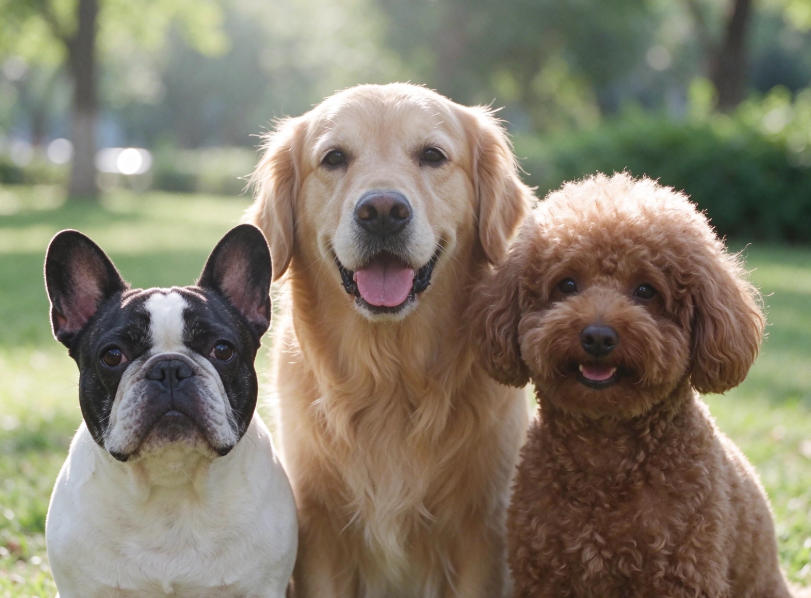
Start with the numbers. The American Kennel Club's 2025 registration data puts the French Bulldog at number one for the fourth consecutive year, a position it took from the Labrador Retriever in 2022 after the Lab's 31-year reign. The Golden Retriever sits at number three. The Poodle, which had held number five every year from 2021 to 2024, slipped to sixth — ending a four-year run, a detail worth remembering later.
Instagram tells a similar story. An analysis of hashtag volumes by UK dog trainers A&T Trained Dogs put #frenchbulldog at roughly 39.8 million posts, the highest of any breed, with #goldenretriever close behind at around 38 million and #poodle at about 24.5 million. For context, #dogsofinstagram itself carries over 331 million posts — the breed tags are a meaningful slice of a very large pie.
But volume is the output, not the cause. The cause is format fit.
The Frenchie is a comedy engine. Flat face, upright bat ears, and a permanently unimpressed expression produce a face that reads instantly at thumbnail size, which is the only size that matters in a feed. More importantly, the Frenchie's proportions make it a natural costume wearer — it looks faintly ridiculous in a hoodie, and that is the point. Lady Gaga and Megan Thee Stallion have both been photographed with Frenchies; Manny the Frenchie built a million-follower account on exactly this dynamic. Comedy is the most shareable emotion on the platform, and the Frenchie manufactures it without trying.
The Golden is an emotion engine. Where the Frenchie gets laughs, the Golden gets sighs. Its coat catches light in a way that makes ordinary phone photos look professionally lit, and its eyebrows are unusually expressive for a dog — the breed can convey joy, guilt and longing in a single frame. That combination is why Golden content performs so well outside pet audiences, in travel, family and lifestyle feeds. It is the breed most likely to make a stranger stop scrolling.
The Poodle is a transformation engine. A Poodle's coat is a canvas. Every grooming session produces before-and-after content, every clip style is a new character, and the resulting posts sit comfortably alongside beauty and fashion content — which is where the advertising money is. The Poodle's cultural reach also runs through its crosses: Labradoodles and Goldendoodles have colonised suburban Instagram almost invisibly, and most owners tag them under doodle hashtags rather than poodle ones. The breed's "official" hashtag count therefore understates its real footprint.
Table 2: The three content engines
| Breed | Core format | Emotional payoff | Commercial spillover |
|---|---|---|---|
| French Bulldog | Costume, reaction, meme | Laughter | Streetwear, harnesses, travel gear |
| Golden Retriever | Lifestyle, family, outdoors | Warmth | Beds, outdoor gear, treats, insurance |
| Poodle | Grooming transformation, fashion | Aspiration | Apparel, grooming tools, accessories |
One caution, though — incumbent status is not guaranteed. The Frenchie is brachycephalic, and public attention to breathing problems in flat-faced breeds has sharpened considerably. The AKC itself notes the breed's popularity may be cooling. When a breed's health profile becomes a mainstream conversation, content creators start hedging, and the aesthetic cycle turns. Which brings us to what is replacing it.
Why the new wave is rising
Four breeds are gaining ground quickly, and they share one trait: each one is visually unmistakable in a way that survives a two-second scroll. The Maltipoo sells softness, the Italian Greyhound sells elegance, the Great Dane sells scale, and the Dachshund sells absurdity. All four also sit at the centre of a broader shift — away from the flat-faced "squished cute" look that defined the 2010s, and toward silhouettes that read better in motion, on video, and on a body that can actually wear clothes.
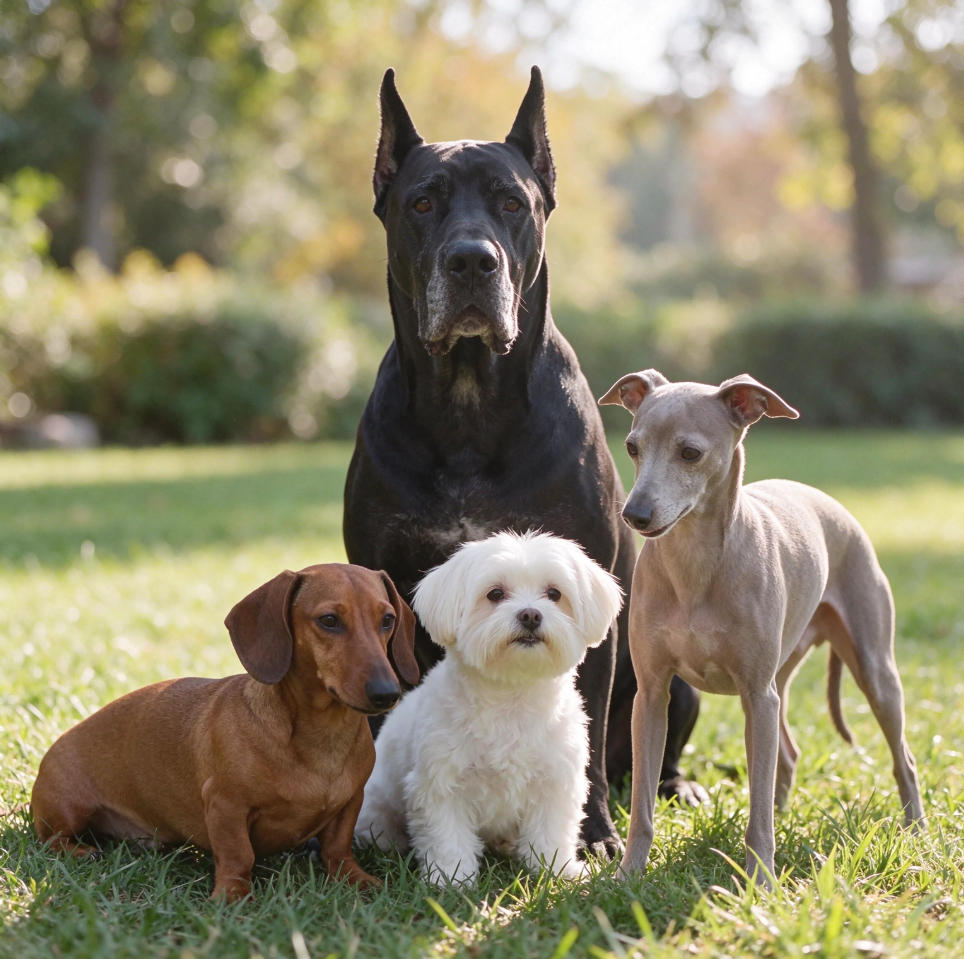
The Dachshund is the clearest case. In the AKC's 2025 ranking it moved from sixth to fifth — the first time it has been in the top five since 2003. On Instagram it carries roughly 24.2 million hashtag posts, and Google searches for "sausage dog" have risen 67.4% over five years. Business Insider flagged the breed as the next "It" dog in October 2025, pointing to urban adaptability and heavy influencer adoption. The mechanic is simple: the Dachshund has the most instantly recognisable silhouette in dogdom, and a silhouette is what survives a fast scroll. Its waddle is inherently funny in motion, which is why it outperforms on Reels and TikTok far beyond its follower counts. There is a real cost here too — the breed's elongated spine makes it prone to intervertebral disc disease, and responsible owners buy ramps, orthopedic beds and support harnesses. That is not incidental to the trend; it is a product category.
The Italian Greyhound is the aesthetic play. The breed is small in absolute numbers — 659 new UK Kennel Club registrations in 2025, up one place in the rankings, and not a top-50 breed on AKC registrations — but its cultural weight is disproportionate. Tika the Iggy, a Montreal Italian Greyhound with a wardrobe of roughly 300 outfits, more than a million Instagram followers and nearly three million on TikTok, appeared in Vogue, walked New York Fashion Week in 2022 and 2023, and was described as "the poster girl for the dog fashion craze." She retired from public events in September 2025 and died in November 2025 at 14 — a moment that, if anything, accelerated the breed's visibility as a wider circle of Iggy accounts inherited her audience. Kylie and Kendall Jenner and Matt Damon have all been photographed with the breed.
The commercial logic is unusually direct. Italian Greyhounds have almost no body fat and no insulating undercoat, so they genuinely need clothing below roughly 10°C. Their slender frame makes them, quite literally, a clothes hanger. This is a breed whose owners buy apparel for physiological reasons, not just aesthetic ones — the strongest possible purchase driver in the category.
The Great Dane is the scale play. Great Danes do not need to be the most numerous breed to win the feed; they need only be the largest thing in it. The format writes itself: a dog the size of a small horse attempting to sit on a lap, wearing a veterinary cone so large the vet had to tape several together. One such clip from @pongoandperditadanes drew roughly 7.4 million views and 718,000 likes. Adjacent giant crosses — the Daniff, a Dane–Mastiff mix — are now building their own followings. Scale creates contrast, contrast creates shares, and shares create the kind of reach that no amount of hashtag optimisation can buy. The product angle is equally obvious: giant breeds need giant beds, oversized harnesses and reinforced everything, at premium prices.
The Maltipoo is the softness play. A Maltese–Poodle cross sits at the intersection of two powerful trends: the doodle boom and the "teddy bear" aesthetic. The result is a dog that looks like a plush toy, photographs beautifully in any light, and — crucially — does not shed, which makes it viable for the apartment-dwelling, allergy-conscious, design-literate owner who drives so much of Instagram's pet content. Accounts like @teddythemaltipoo have passed a million followers; Jessica Simpson, Ashley Tisdale and Ellen DeGeneres have all owned Maltipoos, and celebrity puppies Ziggy and Sushi (Tisdale's) now carry the torch. The breed's weakness is that it is not formally recognised, so it has no AKC ranking and no reliable registry data — its rise is visible in hashtags, breeder waitlists and search volume rather than in official statistics. That is exactly why it is easy to underestimate.
Table 3: Why each new-wave breed is rising
| Breed | Hard signal | Content mechanic | Product category it pulls |
|---|---|---|---|
| Dachshund | AKC #5, first top-five since 2003; "sausage dog" searches +67.4% in 5 yrs | Silhouette + comedic waddle in motion | Ramps, orthopedic beds, support harnesses |
| Italian Greyhound | 659 UK registrations 2025 (up a place); Tika at 1M+ IG, 2.8M+ TikTok | Fashion lookbook, "outfit of the day" | Coats, sweaters, fleece layers |
| Great Dane | Viral clips at 7M+ views; Daniff crosses emerging | Scale contrast, furniture comedy | XXL beds, oversize harnesses, travel gear |
| Maltipoo / Maltese mix | 1M+ follower accounts; sustained celebrity adoption | Plush-toy softness, teddy-cut grooming | Bandanas, bows, lightweight harnesses |
Furvibe offers AI pet models for Product Photography & Lifestyle Photos
How can a pet brand obtain product photography featuring a wider variety of dog breeds — especially for items like apparel and pet beds? If you've only used French Bulldogs for your shoots, how can you make your products appealing to owners of other small dog breeds?
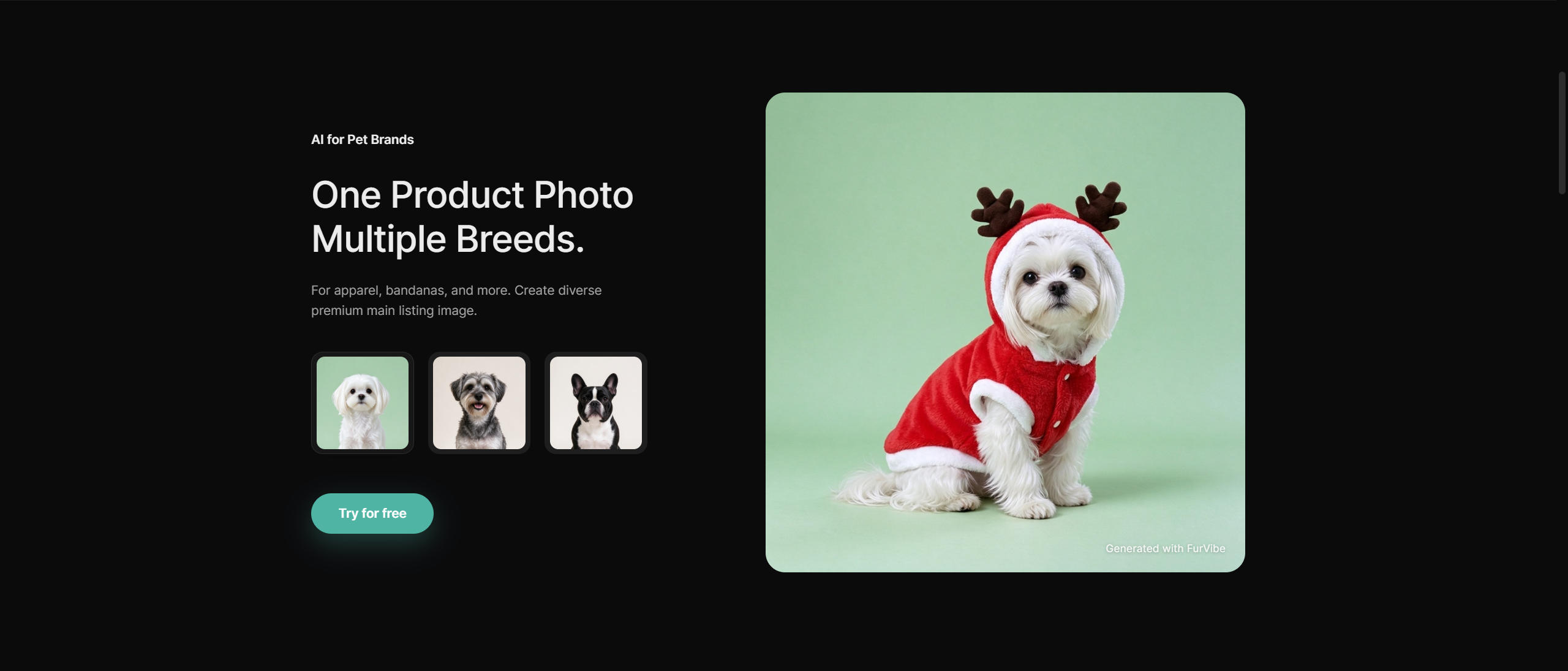
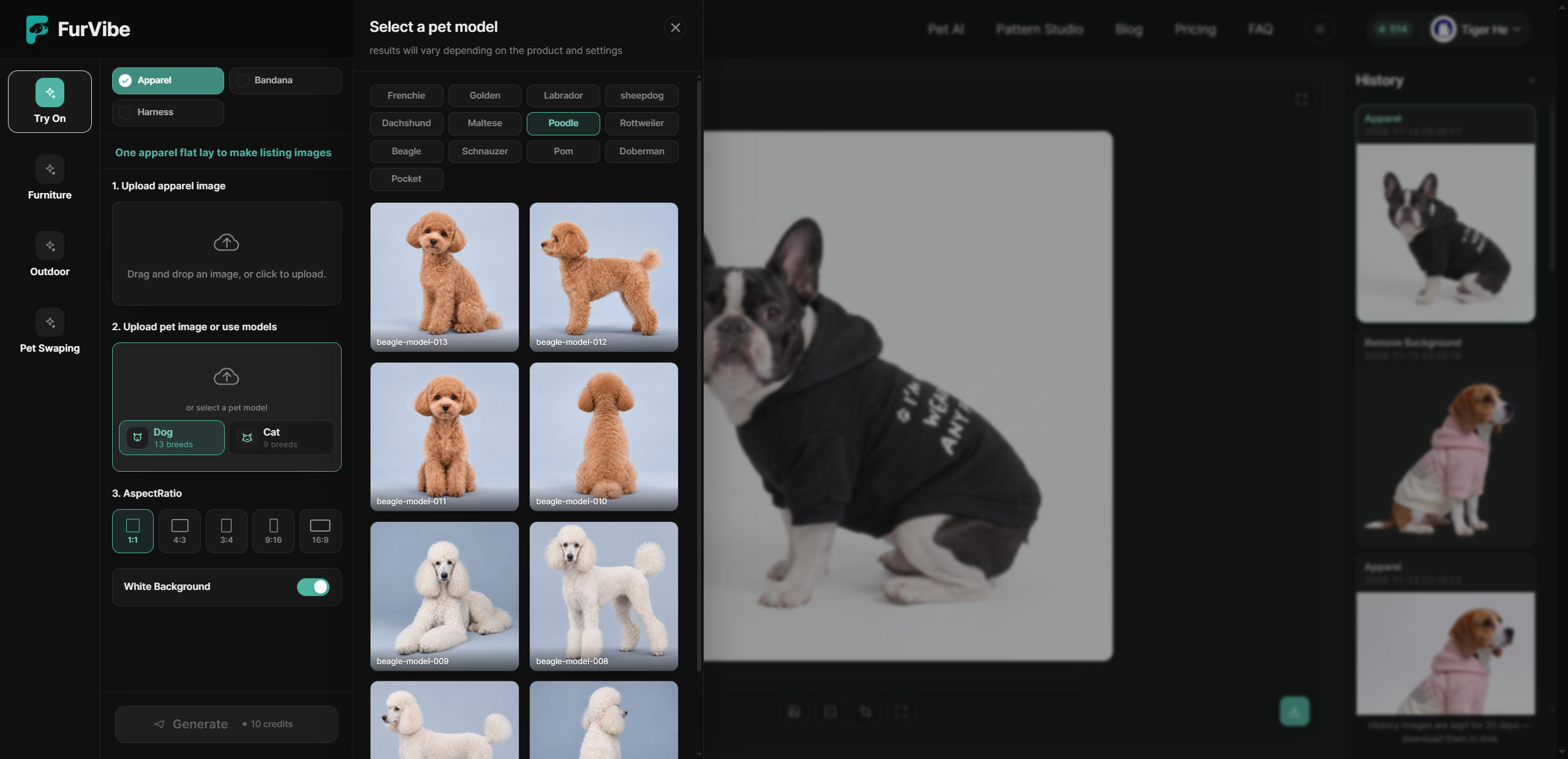
The awkward consequence of seven trending breeds is that a pet brand now needs seven different dogs — and the breeds that sell best are usually the hardest to book. Italian Greyhounds are rare, Great Danes are enormous, Dachshunds are uncooperative on a seamless backdrop, and a Maltipoo's coat changes shape with every groom. Furvibe solves this by generating studio-quality brand visuals from a single product photo, with 30+ breeds and 150+ AI pet models available on demand — so one product can be shot across every trending breed without a single live animal on set.
Furvibe's approach is to treat the breed as a variable rather than a fixed cost. Upload one flat lay or product photo, and the platform multiplexes it across 30+ pet breeds in parallel, drawing on a library of 150+ pet models. According to Furvibe's published figures, generation is roughly 10× faster than a traditional shoot, saves around $1,200 per shoot against studio costs, and delivers 2–8× cost reduction at scale — while preserving 99% of product texture, which is the detail that matters most when a buyer is judging fabric from a thumbnail.
For social content, the same library does double duty. Instead of one set of images cropped for seven platforms, a brand can generate breed-specific creative and run it against breed-specific audiences — a Dachshund variant for the sausage-dog hashtag crowd, a Great Dane variant for the giant-breed community — and test which one converts.
The strategic point is simpler than the feature list. Instagram's trending breeds will keep rotating — the Frenchie is cooling, the Dachshund is climbing, and something else will be climbing in two years. A brand that can only shoot the breed it can book will always be one trend behind. A brand that can produce any breed from a single product photo is, for practical purposes, always current.